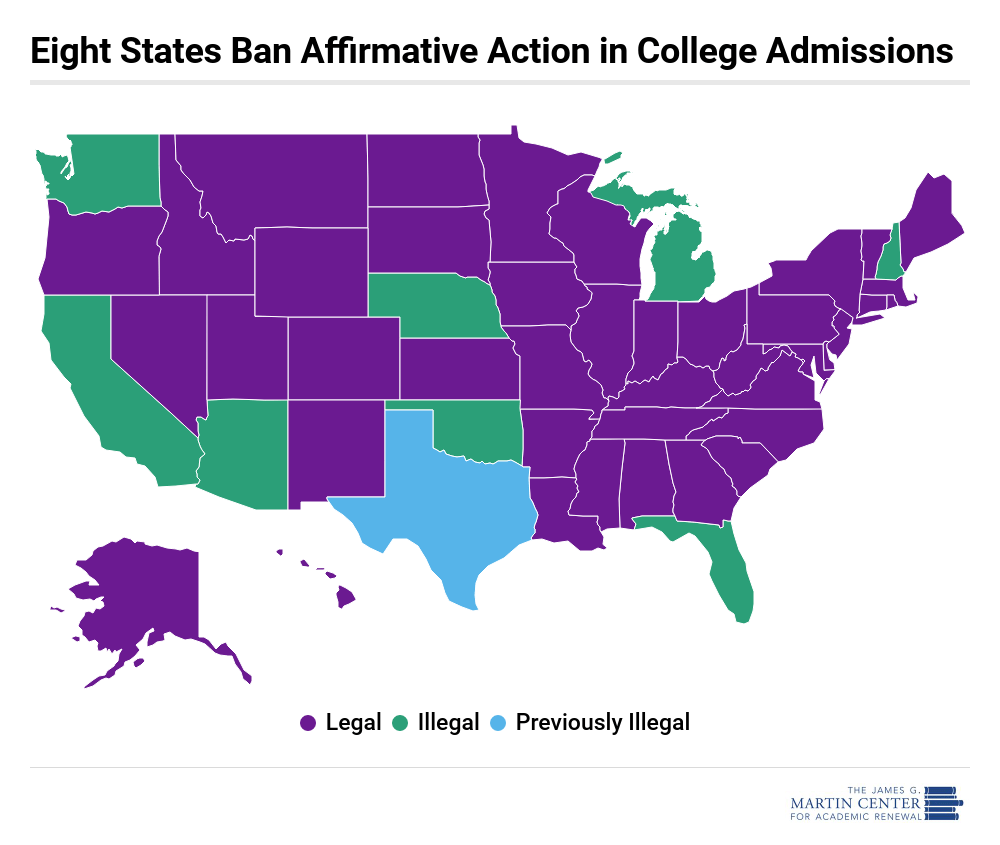
A couple of years ago, Affirmative Action as a policy was being threatened and subjected to bans around the United States. But, recently, Idaho’s Senate committee has approved a measure that would ban affirmative action policies for state agencies, state contracts, and public education. What is interesting about Idaho is that as a state minorities demographics are way less compared to whites. And Idaho, -according to opponents of this ban, has a history of discriminating against marginalized groups, and this ban encourages this behavior to continue. The state can also lose federal funding if the written bill becomes a law. People who support this ban believe that this legislation removes discrimination by eliminating unfair hiring practices that can reduce the chances of the “best person getting a job.”
This belief or rhetoric is very common among people who do not support affirmative action. The idea that affirmative action rewards the least qualified person is a myth. Race and Gender are always subjected to discrimination. And by making policies to eliminate discrimination in hiring processes, and eventually banning affirmative action in the process is entirely ambiguous. Affirmative action as a policy is meant to encourage race and gender-conscious policies to eliminate discrimination. This ban hurts people and can make the hiring process even harder. And evidence has shown that affirmative action bans lower the number of underrepresented groups in enrollment and employment.
California, Michigan, and Washinton are some of the states which banned affirmative action policies. Texas banned affirmative action but later reinstated it. However, Florida was the only anomaly in the study. The study also looked at the population with regards to enrollment in Colleges and Universities. California has a huge population of Hispanics as College aged residents, and Berkley and UCLA (University of California, Los Angeles) have a low enrollment of Hispanic freshmen. Leaving the disparity at 38% and 32% respectfully. Among Black residents, however, the disparity at 7% and 6% respectfully. And this is mostly due to a low population of Black residents. Michigan has a small number of Hispanic residents but a high number of Black residents. So the disparity among Hispanics is not noticeable. The disparity of Black residents concerning College enrollment is at 14%. The effect of Washington State university was less clear. With Texas, it is essential to note that after the ban enrollment rates among Blacks and Hispanics were much lower compared to when affirmative action was reinstated. Florida is the only anomaly in this case because it seems that Florida was able to maintain its minority enrollment compared to the other states.
States need to do better when it comes to protecting its marginalized citizens. Race and Gender will always be in the hands of discrimination. Race matters in this society and by creating policies where “color-blindness” is a key, cripples society. Idaho’s bill was not the first case of a state trying to ban affirmative action, and it certainly will not be the last state, in my opinion. We need to stop the madness. The rhetoric behind affirmative action is crazy too. I believe that some of its rhetoric needs to stop also. No, you did not get into that school because maybe your application was terrible, or you did not do anything in high school or because you have written a terrible essay. I wouldn’t say I like it when people blame others for their failures or downfall in life. Affirmative action seems to be a coddling tool used by people to explain why they did not get into school or why someone did not get a job. I’m not too fond of that, and as a female and a Person of Color, I feel dehumanized by it. My work and effort I put forward don’t matter anymore, and my value as a person is questioned. Systemic racism and discrimination did not happen overnight. It happened over time, and rhetoric like that reinforces it.
 Izzy's World