From my previous blog post, I looked at the various methods colleges and universities were using to promote diversity without using race-based Affirmative Action policies. While these policies may promote diversity on campuses, Affirmative Action policies are still needed to ensure that minorities are protected. As I stated in my previous post, not all minorities fall into stereotypical categories. Not all minorities are poor or come from low-income families. Only a few fall into that category, and when you want to leave race out of college admissions and create color-blind policies, you leave out the people who you are trying to help. Even though nine states have banned Affirmative Action policies, we still need those policies.
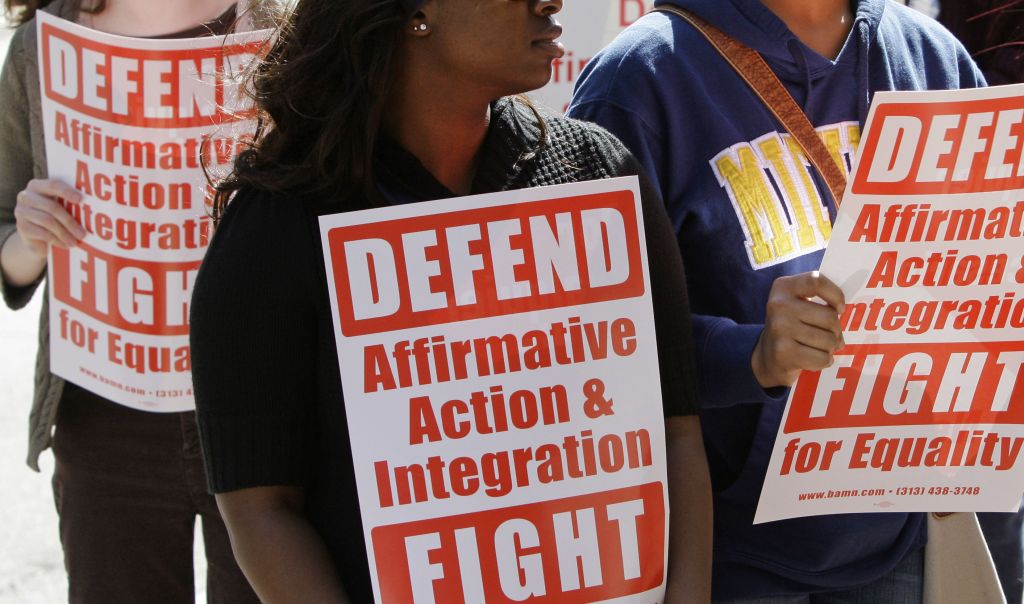
First, I would look at the arguments that argue to ignore race and look at economic disadvantages to promote racial diversity.
People who support this policy believe that “socio-economic preferences can open the doors to impressive young students- including underrepresented minorities.” Elite colleges tend to favor wealthy individuals and students whose parents are alumni. Supporters of these policies also argue that income disparities among Blacks and whites are enormous compared to racial disparities. Using Harvard within his study, Richard Kahlenberg states a Black median family income was 57.8% of a white median family income. He suggests that inequalities in neighborhood opportunities are more significant in Black neighborhoods than in white communities. But, critics of this argument argues that using economic disadvantages instead of race, cannot ensure racial diversity.
While it is true that elite colleges have wealthy students, only 38 colleges had more students from the top 1% of America than the bottom 60%. And Black and Hispanic students are indeed more likely to be poor than other students- the majority of poor students who apply to elite colleges are not Black nor Hispanic. According to the National Center for Education Statistics, there is a small number of Black and Hispanics that graduate high school. Racial and gaps in education achievements have always been evident. And those gaps start at elementary schools. Thus, Making a program that is based on poverty at selective schools, will target more white people than racial minority students.
Elite colleges are also known to favor alumni’s children too. The preference giving to legacy students disproportionately favors white students. According to documents used during the Harvard v. Students for Fair Admission trial, the admission rate of legacy applicants is five times that of non-legacy students. More than 21% of white legacy students are admitted, compared to Black and Hispanic legacy students who are only 4% to 6%. Legacy admissions help those who are privileged, too. Thus, undermining what Affirmative Action is really about.
My Thoughts on the Topic:
Looking at various data, it seems to me that using socio-economic policies instead of race-based policies might not help achieve racial diversity. Racial minorities are a minority in almost every field. There is a low percentage of minorities that graduate high school and college, compared to white individuals. Seeing how minorities applicants who are poor are less likely to apply to elite schools, makes the policy favoring white applicants. Affirmative Action was designed to help racial minorities and females have an equal opportunity. And policies that looks socio-economic status instead of race undermines Affirmative Action policies.
 Izzy's World