Featured

Harvard and Affirmative Action: Will Affirmative Action Cease to Exist?

Summary of the Case: Students for Fair Admissions v. Harvard

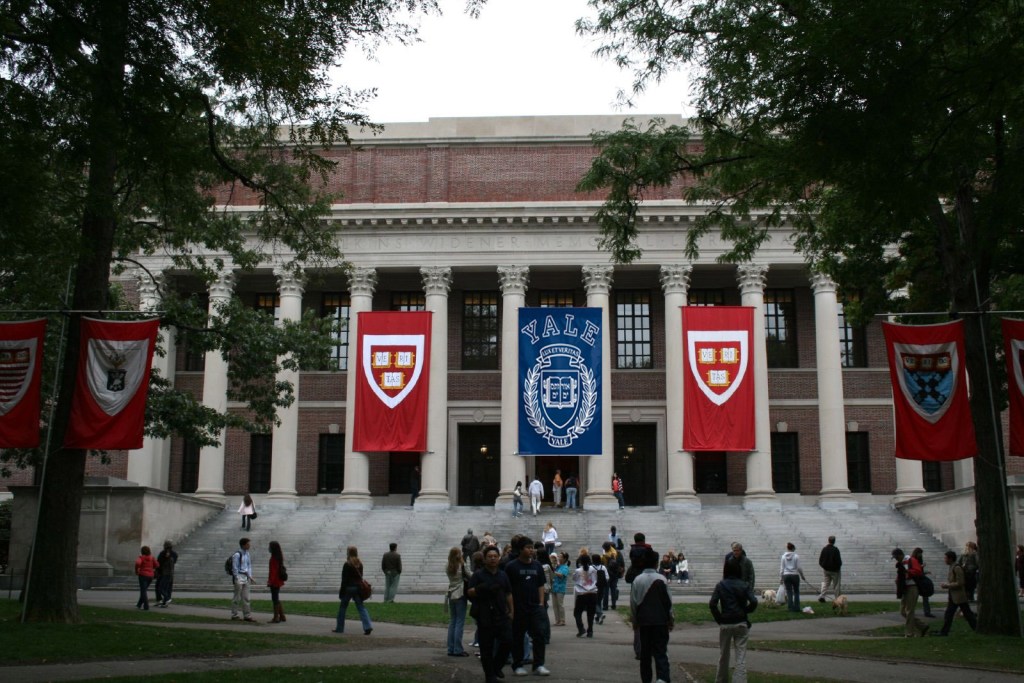
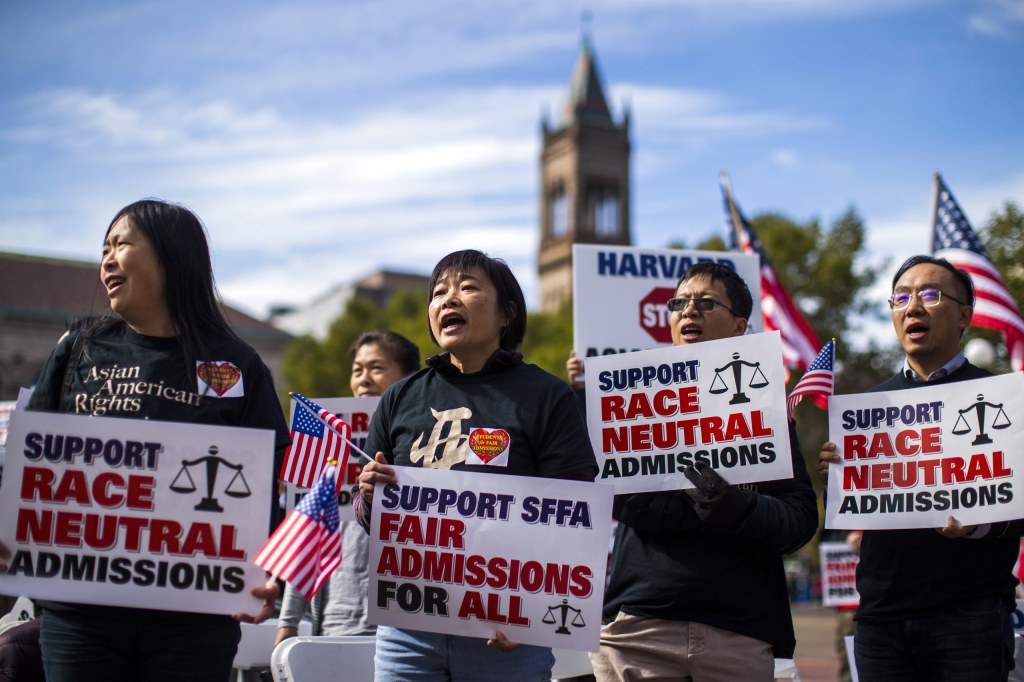
Harvard University, a well known Ivy League school, was in the midst of controversy surrounding a lawsuit. A group of Asian-American students who were rejected by the University sued Harvard. The case itself involves a white man suing on behalf of Asian-American students who wanted to remain anonymous. The group of Asian-American students believed that Harvard put a cap on the number of Asian students in order to promote diversity. The case focused on whether the University violated the Civil Rights Act by discriminating against Asian-Americans. The Students for Fair Admission (plaintiffs) argued that race should be removed from the application process and that Harvard caps the number of Asian-American students who are accepted into the University. However, Harvard University (the defendant) argues that ‘there is no cap against Asian-American students’ and that their admission process is necessary to promote diversity among its student body.

The Outcome of the Case:

Federal Court judge Allison Burroughs ruled in favor of Harvard University says that “the Court finds no persuasive documentary evidence of any racial animus or conscious prejudice against Asian Americans.”  While also criticizing Harvard’s admission process by saying, “it is not perfect… ensuring diversity relies on race conscience admissions”. Harvard’s president Lawrence Bacow supporting Judge Burroughs’s decision made a statement reaffirming Harvard’s values in promoting diversity. This case has stirred a lot of controversies and might have the potential to reach the Supreme Court of the United States (SCOTUS). The plaintiff of this case wrote an appeal to the court’s decision. Which, if granted, might be taken to the Supreme Court for further evaluation. Many fear that if this case is brought up to SCOTUS, that Affirmative Action might disappear. With the Supreme Court having a majority of Conservatives, people have pointed to the fact that race-conscious admissions might be banned. As mentioned in the last blog post, the Justice Department is planning to investigate and sue colleges and universities that are using race-conscious admissions that discriminate against white students. And, this is a part of Trump’s plan, which basically reverses all of Obama’s pass affirmative action policies that encourage race-conscious admissions to promote racial diversity.   

My Opinion Behind the Case:

I agree that race should be considered when trying to racially diversify colleges or universities. However, I do not agree that colleges or universities should use quotas in attempts to diversify its campus. And given the summary and outcome of this specific case, I do believe that this case will reach the Supreme Court’s docket. Do I think that SCOTUS would reverse the judicial decision? I honestly cannot give a firm yes or no answer. But, using Fisher v. University of Texas ruling and predicting what SCOTUS might rule in Students for Fair Admissions v. Harvard, I do believe that the majority rule would favor Students for Fair Admissions. The case Fisher v. University of Texas focuses on whether the University of Texas use of race as a consideration for admission a violation of the Equal Protection Clause of the Fourteenth Amendment. The Court ruled that the University did not violate the Equal Protection Clause of the Fourteenth Amendment. Also, this case was lead by a 4-3 majority-Justice Elena Kagan did not participate in the discussion or decision of this case.    

Featured

My First Blog Post

Affirmative Action

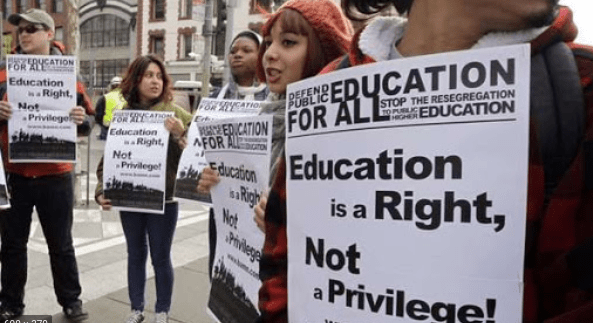
Education is the most powerful weapon which you can use to change the world

— Nelson Mandela.

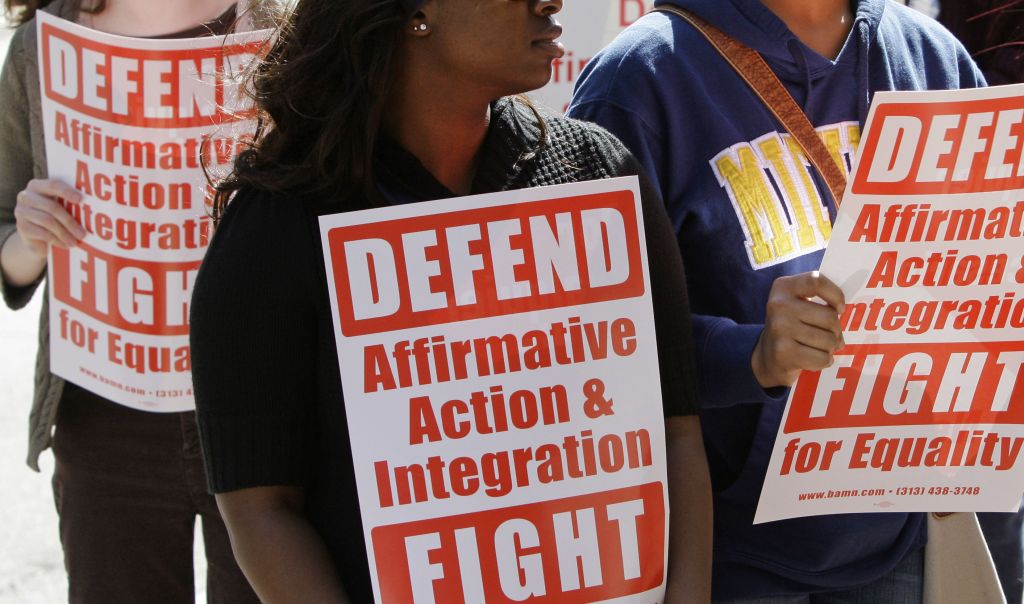
For my blog post, I am going to be talking about the Civil Rights policy. But more specifically about Affirmative Action. This policy has stirred controversy and has gained a lot of attention, both from Civil Rights activists and from the general population. Affirmative Action was supposed to “change” African American futures and “erase” any injustice. The goal was to create equality, but it actually did the opposite. For me, as a Black female, I faced so much bias just for my race and sex. And Affirmative Action hits a soft spot for me. 

Affirmative Action Versus The Novel Coronavirus

From my previous blog post, we looked at the ongoing investigations of Harvard and Yale by the US Justice Department. This investigation, if reached to the Supreme Court, can have a massive effect on the survival of Affirmative Action. Although my last blog post talked about schools and places of higher education, we will no shift focus to employment. Today we will be looking at Affirmative Action now given this current pandemic, COVID-19 (Novel Coronavirus).

On March 17, 2020, the Office of Federal Contract Compliance Programs issued a temporary waiver of three areas of equal employment. According to the memorandum, the exemption and waiver are for three months. The waiver is to temporarily exempt and waives certain affirmative action obligations connected to supply, service, and federal construction contracts. While we are in a pandemic, there is no reason behind suspending crucial civil rights protection. 

Who does this waiver apply to?

This waiver applies strictly to companies providing services, supplies, and construction to the federal government. However, this temporary waiver will exempt contractors who receive contracts from their Affirmative Action obligations. For a few contractors, this will mean that relief from its current Affirmative Action efforts, written Affirmative Actions plans, and equal employment opportunity policy statements. 

The Office of Federal Contract Compliance Programs is a civil rights agency in the United States Department of Labor. The three areas OFCCP enforces are the Executive Order of 11246 (Equal Employment Opportunity), Section 503 of the Rehabilitation Act of 1973, and the Vietnam Era Readjustment Assistance Act of 1974. Each of these laws prohibits contractors from discriminating against individuals based on race, sex, sexual orientation, gender identity, national origin, disability, or status as a veteran. 

But, the memo does not take away the responsibility of contractors not to discriminate

However, organizations who are committed to ensuring equal opportunity in employment, have written letters to the Office of Federal Contract Compliance, asking to rescind the memo of March 17th, 2020. Many believe that this memo will do more harm than good. To ensure equal opportunity in employment, these organizations want the OFCCP to rescind the memo. The Coronavirus pandemic is disproportionately impacting People of Color. And people argue that to help communities that are profoundly affected by Coronavirus, and we need those Affirmative Action policies—thus making the memo from March 17th, 2020, creating the opposite effect. 

My Thoughts:

It seems to me when an Affirmative Action plan is removed; States try to come up with a way to enhance racial diversity. As mentioned before, the only way to ensure racial diversity is by using race-based Affirmative Action policies. Similar to colleges that ban Affirmative Action policies, and who do not have racial diversity, I feel like this policy is going to follow the same thing. Racial minorities need to be protected, and this crisis is making it worst for racial minorities. Interestingly is that the memo called for those categories to be waived, they also left it up to individuals to ensure racial diversity. 

The Investigation That Could End Affirmative Action

From my previous blog post, I looked at some of the methods that colleges and universities used to replace race-based affirmative action policies. These policies may promote economic diversity but cannot ensure racial diversity. Racial diversity can occur efficiently using Affirmative Action policies. A couple of weeks ago, I looked at the controversy surrounding a recent Affirmative Action case. The case I looked at was Students for Fair Admissions v. Harvard. The implications this case may have if brought in front of the Supreme Court can be detrimental too. 

As stated before in my previous blog posts, the current administration is investigating colleges and universities accused of practicing discriminatory policies against white applicants, and Affirmative Action policies may cease to exist. Most importantly, these investigations are being real, and in 2018, the Trump Administration was investigating Yale University. Not only Yale, but Harvard University was also on the chopping block. Similar to the  Students for Fair Admissions v. Harvard, Yale was under investigation for discriminating against Asian-American students. 

What sparked the investigations regarding Yale University? 

A letter. 

The US Justice and Education Departments have launched a civil rights investigation into whether Yale University discriminated against Asian American applicants. The US Justice Department also backed the Students for Fair Admissions’s appeal. From a brief filed with the federal court hearing the case, the Justice Department, states that “…Harvard provides no meaningful criteria to cabin its use of race; use of a vague personal rating’ that harms Asian American applicants’ chances for admission… and may be infected with racial bias…and has never seriously considered race-neutral alternatives in its more than 45 years using race to make admissions decisions.” The brief also contains past Supreme Court rulings, which permit colleges to consider race in admissions, and argues that Harvard goes beyond those limits. Many believe that this is a tactic by the administration to challenge the Supreme Court decisions regarding Affirmative Action in college admissions. The SFFA even suggested that Harvard systematically discriminates against Asian-Americans by suppressing the number of Asian American students that attend the school. They also suppose that the school caps the number of Asian American students and reserve spots for “less-qualified” students of other races. The idea that Affirmative Action favors those who are less qualified has been a proven myth.  

What is interesting about these cases is that the US Justice Department is purposely targeting Harvard and Yale. In a complaint from 2016, Yukong Zhao alleged that Yale, Brown University, and Dartmouth College, all unfairly denied admissions to Asian American applicants due to their race. The department dismissed his complaints about Brown University and Dartmouth College but listed to his complaint about Yale. Many believe that this is a tactic to undo past Affirmative Action precedent by challenging SCOTUS (The Supreme Court of the United States) and using this investigation as a larger plan to dismantle Affirmative Action. Conservatives have always opposed affirmative action policies that use race-based admissions. And given the current makeup of the Supreme Court, a majority of the judges are Conservative.

The Harvard and Yale investigations can have severe consequences for college admissions policies and Affirmative Action. No matter what, racial minorities will always be in the last place. Policies that fave Affirmative Action gives minorities a chance in society. It allows them to excel and succeed in life. We need to protect Affirmative Action policies at all costs. 

Affirmative Action: How Can We Promote Racial Diversity Without Using Race?

From my previous blog post, I looked at the various methods colleges and universities were using to promote diversity without using race-based Affirmative Action policies. While these policies may promote diversity on campuses, Affirmative Action policies are still needed to ensure that minorities are protected. As I stated in my previous post, not all minorities fall into stereotypical categories. Not all minorities are poor or come from low-income families. Only a few fall into that category, and when you want to leave race out of college admissions and create color-blind policies, you leave out the people who you are trying to help. Even though nine states have banned Affirmative Action policies, we still need those policies. 

First, I would look at the arguments that argue to ignore race and look at economic disadvantages to promote racial diversity. 

People who support this policy believe that “socio-economic preferences can open the doors to impressive young students- including underrepresented minorities.” Elite colleges tend to favor wealthy individuals and students whose parents are alumni. Supporters of these policies also argue that income disparities among Blacks and whites are enormous compared to racial disparities. Using Harvard within his study, Richard Kahlenberg states a Black median family income was 57.8% of a white median family income. He suggests that inequalities in neighborhood opportunities are more significant in Black neighborhoods than in white communities. But, critics of this argument argues that using economic disadvantages instead of race, cannot ensure racial diversity.  

While it is true that elite colleges have wealthy students, only 38 colleges had more students from the top 1% of America than the bottom 60%. And Black and Hispanic students are indeed more likely to be poor than other students- the majority of poor students who apply to elite colleges are not Black nor Hispanic. According to the National Center for Education Statistics, there is a small number of Black and Hispanics that graduate high school. Racial and gaps in education achievements have always been evident. And those gaps start at elementary schools. Thus, Making a program that is based on poverty at selective schools, will target more white people than racial minority students. 

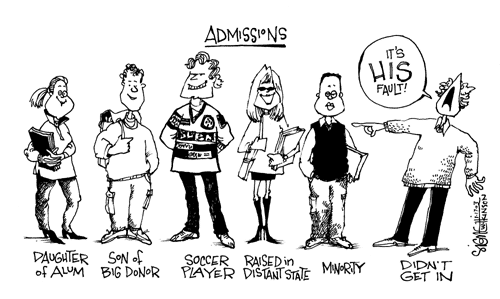
Elite colleges are also known to favor alumni’s children too. The preference giving to legacy students disproportionately favors white students. According to documents used during the Harvard v. Students for Fair Admission trial, the admission rate of legacy applicants is five times that of non-legacy students. More than 21% of white legacy students are admitted, compared to Black and Hispanic legacy students who are only 4% to 6%. Legacy admissions help those who are privileged, too. Thus, undermining what Affirmative Action is really about. 

My Thoughts on the Topic:

Looking at various data, it seems to me that using socio-economic policies instead of race-based policies might not help achieve racial diversity. Racial minorities are a minority in almost every field. There is a low percentage of minorities that graduate high school and college, compared to white individuals. Seeing how minorities applicants who are poor are less likely to apply to elite schools, makes the policy favoring white applicants. Affirmative Action was designed to help racial minorities and females have an equal opportunity. And policies that looks socio-economic status instead of race undermines Affirmative Action policies. 

Affirmative Action: If Not Race-Conscious Admissions What Else?

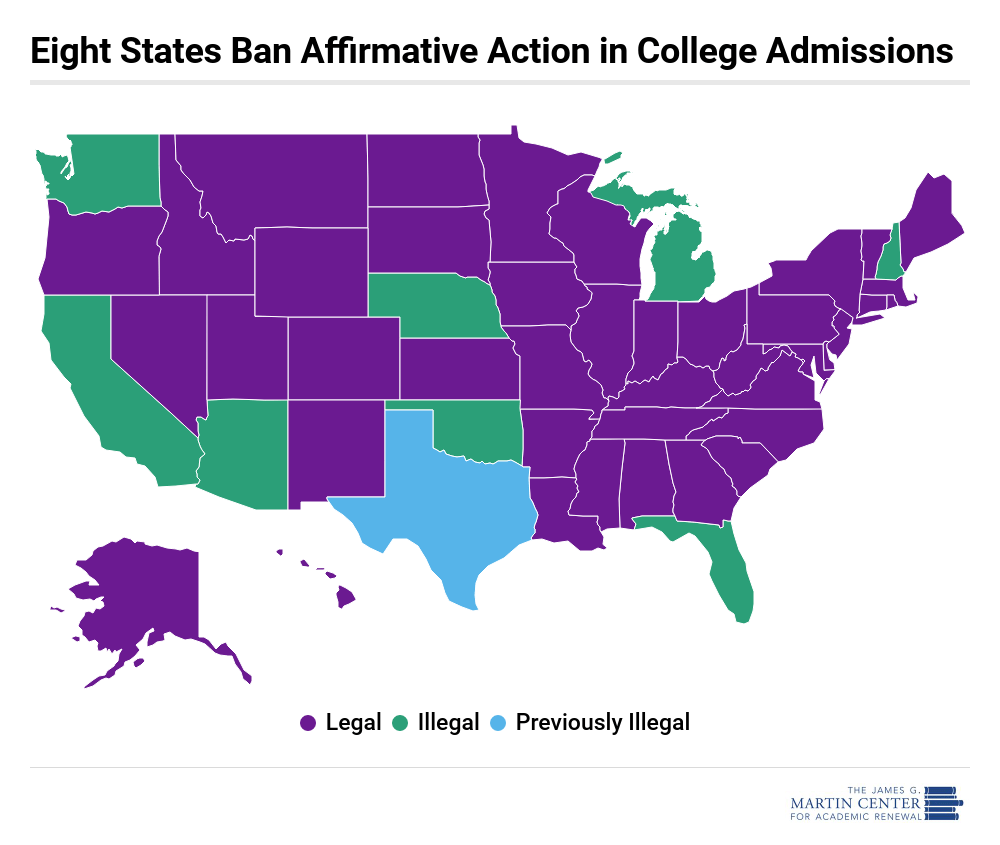
Last blog post, we looked at the constitutionality of Affirmative Action bans. More specifically, we looked at what case allowed these bans to happen. In the case of Schuette v. Coalition to Defend Affirmative Action, voters were allowed to vote on the issues of Affirmative Action. The states who have banned Affirmative Action policies are Arizona, California, Florida, Michigan, Nebraska, and New Hampshire. Florida and New Hampshire were the only two states who did not have voter referendum as the other states did. But, what are the methods that these states have used to ensure diversity at campus? Today, we will look at how these states have improved diversity without relying on race-based policies. 

The methods that each state has followed was to promote racial, ethnic, and socioeconomic diversity on campus. The top five strategies that were used are: Creating Percent Plans, Adding Socioeconomic Factors to Admissions, Funding New Finacial aid Programs, Improving Recruitment and Support, and Dropping Legacy Preferences.   

  1. The Creation of Percent Plans:

Seniors who graduated at the top percentage of their High School class was guaranteed admission at Public Colleges. This plan not only ensured geographical diversity but enhances socioeconomic and racial diversity. This plan applies to all high schools, despite whether it is underfunded or well funded. States who followed those methods are California, Florida, and Texas.    

  1. The Addition of Socioeconomic Factors to Admission Processes:

Colleges within those states had added socioeconomic factors to admission decisions. Such factors include family income, wealth, parent status (single parent or not), high school performance, neighborhood demographics, and parent’s education level. The University of Washington has started to ask applicants to describe any personal hardships or work or family obligations they have faced. 

  1. Funding for New Financial Aid Programs:

Financial aid is vital for students who go to college. But financial aid is a crucial ingredient to those who come from low-income families. Some colleges and universities have increased their financial aid packages to have low-income students attend their schools. Any of the campuses at the University of Nebraska now offers free tuition for all Nebraska residents who are Pell Grant recipients, that maintain a minimum GPA and full-time enrollment. 

  1. Improving Recruitment and Support:

Universities and colleges have increased outreach and support for low-income students. Students who have high grades and who are from low-income families do not know about their college options. So, to alleviate those problems, universities try to reach out to those students. The University of Florida has created a program designed for first-generation college students. The University of Florida also supports them by giving them full scholarships once enrolled too. 

  1. Dropping Legacy Preferences:

The question that is known on all college applications: Do you have a parent who has attended this college? Colleges who have banned race-based affirmative action policies have also banned this question. Legacy preferences tend to favor white, wealthy applicants while also harming disadvantaged applicants. After ending its affirmative action policies, the University of California, University of Georgia, and Texas A&M University all dropped their legacy preference. 

My Conclusion:

Looking at the methods colleges and universities are using compared to using race-based affirmative action policies, I feel as though Affirmative Actions policies do the same thing. People do not support the use of race on college admissions, but support the idea of increasing minority students on campus. A recent study suggests that 63% of Americans believe that race or ethnicity should not be a factor in college admissions. But 71% of Americans say that “Affirmative Action programs designed to increase the number of black and minority students on college campuses are a good thing.”  Those methods sound fair, but not all minorities fall within those categories. Everyone comes from different backgrounds and hardships. But, racially, we are all the same. Race-based admissions ensure that everyone considered within the application process.  

Affirmative Action: Why Can States Ban Affirmative Action Policies?

A couple of weeks ago, we looked at the Affirmative Action Bans. We also examined how theses ban affected the enrollment rates of minority students. Today, we will be looking at what made those bans constitutional. 

Currently, eight states have banned race-based affirmative action policies. These states made the bans at all public universities. Following the US Supreme Court’s ruling in Fisher v. University of Texas, that stated that colleges must demonstrate that using race in their admissions process must be applied under strict scrutiny, which means that those policies must be ‘tailored’ to serve a compelling governmental interest. However, just a year later, SCOTUS ruled in a case called Schuette v. Coalition to Defend Affirmative Action. This case was decided in 2014 by the US Supreme Court. Here are the facts of the matter: 

Background of the Case:

In 2006, Michigan voters supported a proposition to amend the state constitution. Voters wanted the constitution to prohibit sex and race-based preferences in public education, public employment, and public contracting. Hearing the news, supporters of Affirmative Action formed a coalition group called the Coalition to Defend Affirmative Action. The Coalition sued the governor, the regents and board of trustees, and argued that the proposition violated the Equal Protection Clause. Later on, Attorney General and Michigan Law School applicant Eric Russell filed motions to intervene as defendants. Their proposal was granted, but the plaintiffs argue that Russell should be removed from the case. Russell did not represent interest separate from the AG. The district courts granted summary judgment in favor of the defendants but also allowed the motion to have Russell removed.  This case was brought in front of the Supreme Court of the US. So, the question SCOTUS looked at was if the proposition violated the Equal Protection Clause of the Fourteenth Amendment. 

End Result of the Case:

The plurality of the ruling was 6 to 2. SCOTUS ruled that the proposition did not violate the Equal Protection Clause of the Fourteenth Amendment. Justice Kennedy argued in the majority opinion that the attempt to define and protect its interest, based on race, ran the risk of the government to classify people based on race. In essence, this will allow the government to perpetuate the same racism, and such policies are used to alleviate that problem. Thus, allowing voters to have a say in Affirmative Action policies. 

The case Schuette v. Coalition to Defend Affirmative Action, allowed voters to have a say in Affirmative Action policies. This news may be troubling for many universities, who use race-based Affirmative Action policies as their primary source for promoting diversity on campus. The states that have banned Affirmative Action policies are using voter referendum are California, Michigan, Washington, Nebraska, Arizona, and Oklahoma. In Florida, Governor Jeb Bush passed an executive order enforcing the ban, and in New Hampshire, a bill has passed that banned the consideration of race.     

Blog Audit: My Thoughts on Affirmative Action

Throughout my blog posts, I have focused on Affirmative Action as a policy. I examined Affirmative Action and how it relates to school and employment. I used specific cases that looked at Affirmative action policies to see if they were constitutional. One leading case I focused on was Harvard v. Students for Fair Admissions. This case did not go to the Supreme Court if the case did, many fear the effects it would have. Some argue that Affirmative Action will cease to exist. And the Trump administration plans to sue any university whose admission process is discriminatory against white people.     

I knew about Affirmative Action, but I did not know how extensive the policy was. I did not realize how Affirmative Action covered employment; I only thought that Affirmative Action covered the education system. As I wrote my weekly posts, my view on Affirmative Action has changed. Upon further discussion with friends and family, I realized that Affirmative Action is needed. I also came to realize that Affirmative Action on paper is not a bad thing. I never thought that Affirmative Action was terrible, but I always knew it didn’t fulfill its purpose.  Being a minority, and a part of a “disadvantaged” group of society, you are still subjected to discrimination and prejudice.  

I learned this fact the hard way during my high school years. But policies like Affirmative Action are meant to help those who are victims of discrimination, by giving them a platform for educational and economic opportunities.  When I did further research on the topic and saw how many people oppose Affirmative Action so much that they want to ban Affirmative Action policies, I was shocked. I was in one of those scenarios where you don’t know how good you have it until its gone. And if Affirmative Action is erased from history,  I do believe it would be harder for people of color to be employed or get an education. Looking at the statistics from colleges and universities that banned Affirmative Action policies, it is clear what happens to minority enrollment compared to white enrollment. Using the data that I found and from additional readings, I found out that Affirmative Action needs to exist. 

As I stated before, my feelings toward Affirmative Action policies have changed.  Seeing what the current administration thinks about Affirmative Action and how they plan on reversing Obama’s initiatives on Affirmative Action makes me concern for the future. Before I wrote my blog posts or did research, I was a firm believer that Affirmative Action diminishes the effort and hard work of minorities. But looking closely at the policy, I came to realize that we need this and educating ourselves on our rights as minorities are fundamental. As I learned in class, it is essential to know what rights are. If we do not educate ourselves on what policies are in place to help us, we become vulnerable to abuses, and our rights are infringed on.

The Affirmative Action Ban

A couple of years ago, Affirmative Action as a policy was being threatened and subjected to bans around the United States. But, recently, Idaho’s Senate committee has approved a measure that would ban affirmative action policies for state agencies, state contracts, and public education. What is interesting about Idaho is that as a state minorities demographics are way less compared to whites. And Idaho, -according to opponents of this ban, has a history of discriminating against marginalized groups, and this ban encourages this behavior to continue. The state can also lose federal funding if the written bill becomes a law. People who support this ban believe that this legislation removes discrimination by eliminating unfair hiring practices that can reduce the chances of the “best person getting a job.” 

This belief or rhetoric is very common among people who do not support affirmative action. The idea that affirmative action rewards the least qualified person is a myth. Race and Gender are always subjected to discrimination. And by making policies to eliminate discrimination in hiring processes, and eventually banning affirmative action in the process is entirely ambiguous. Affirmative action as a policy is meant to encourage race and gender-conscious policies to eliminate discrimination. This ban hurts people and can make the hiring process even harder. And evidence has shown that affirmative action bans lower the number of underrepresented groups in enrollment and employment.   

California, Michigan, and Washinton are some of the states which banned affirmative action policies. Texas banned affirmative action but later reinstated it. However, Florida was the only anomaly in the study. The study also looked at the population with regards to enrollment in Colleges and Universities. California has a huge population of Hispanics as College aged residents, and Berkley and UCLA (University of California, Los Angeles) have a low enrollment of Hispanic freshmen. Leaving the disparity at 38% and 32% respectfully. Among Black residents, however, the disparity at 7% and 6% respectfully. And this is mostly due to a low population of Black residents. Michigan has a small number of Hispanic residents but a high number of Black residents. So the disparity among Hispanics is not noticeable. The disparity of Black residents concerning College enrollment is at 14%. The effect of Washington State university was less clear. With Texas, it is essential to note that after the ban enrollment rates among Blacks and Hispanics were much lower compared to when affirmative action was reinstated. Florida is the only anomaly in this case because it seems that Florida was able to maintain its minority enrollment compared to the other states. 

States need to do better when it comes to protecting its marginalized citizens. Race and Gender will always be in the hands of discrimination. Race matters in this society and by creating policies where “color-blindness” is a key, cripples society. Idaho’s bill was not the first case of a state trying to ban affirmative action, and it certainly will not be the last state, in my opinion. We need to stop the madness. The rhetoric behind affirmative action is crazy too. I believe that some of its rhetoric needs to stop also. No, you did not get into that school because maybe your application was terrible, or you did not do anything in high school or because you have written a terrible essay. I wouldn’t say I like it when people blame others for their failures or downfall in life. Affirmative action seems to be a coddling tool used by people to explain why they did not get into school or why someone did not get a job. I’m not too fond of that, and as a female and a Person of Color, I feel dehumanized by it. My work and effort I put forward don’t matter anymore, and my value as a person is questioned. Systemic racism and discrimination did not happen overnight. It happened over time, and rhetoric like that reinforces it.  

Affirmative Action at School and Work

Last week, we looked at Affirmative Action policies in higher education and how colleges and universities try to make their campus racial diverse by considering race in the admission process. We looked and examined how Harvard’s lawsuit could have detrimental effects against Affirmative Action as a policy. I believe that as a policy, Affirmative Action is still needed, even though it has its flaws. Now we are going to be examining Affirmative Action as it pertains to public schools and the workforce.    

Affirmative Action at Public Schools: Meredith v. Jefferson County Board of Education (2006)

Jefferson County Public Schools was integrated due to court order up until 2000. When Jefferson County Public Schools decided to create an enrollment plan to maintain substantial racial integration, students could have chosen freely what school they wanted to attend. However, no school was allowed to have an enrollment of black students less than fifteen percent or greater than fifty percent of the school’s population. Crystal Meredith, a parent of Joshua, had applied for her son to go to Bloom Elementary School, and the school rejected his application due to the fact that his admittance would imbalance its racial makeup. Parents sued the school district, arguing that the schools’ racial classifications violated the students’ Fourteenth Amendment right to equal protection. 

Result of Meredith v. Jefferson County Board of Education:

The Supreme Court applied ‘strict scrutiny’ to the framework and found Jefferson’s County Public School enrollment plan unconstitutional under the Equal Protection Clause of the Fourteenth Amendment by a 5-4 vote. Compare to Higher Education, Jefferson school’s program did not involve any individual consideration.  The School’s Plan was targeted towards demographic goals and not by any educational benefit from racial diversity. Even though the use of race, in this case, was unconstitutional, Justice Kennedy argued that public schools may consider race to ensure equal educational opportunities.

Affirmative Action in the Workforce: Ricci v. DeStefano (2009) 

Hispanic and white candidates for promotion in Connecticut, fire department sued after their examinations were discarded because there wasn’t enough of minorities that passed their test. The New Haven, Civil Service Board, failed to certify the two exams needed for the plaintiffs’ promotion from Lieutenant to Captain. The Board did not approve the examinee’s test because the results of the test would have promoted a high number of white candidates compared to minority candidates. The Supreme Court ruled that the plaintiffs had their rights violated under Title VII of the Civil Rights Act (1964) and the Fourteenth Amendment. 

Result of Ricci v. DeStefano: 

The Supreme Court held that the City of New Haven violated the Civil Rights Act. The Court reasoned that before an employer intentionally discriminates for the sole purpose of avoiding a “disparate impact” on race, the employer must have a strong basis in evidence that be subjected to liability. 

My Opinion:

It is important to note that both of these cases take place in the 21st century and are only a few years old. With both cases, violation of the Civil Rights Act and the Fourteenth Amendment are always mentioned when talking about Affirmative Action policies. The Civil Rights Act of 1964 banned segregation based on race, religion, or national origin at all places with public accommodation. However, Title VII of the Civil Rights Act banned employment discrimination of race, religion, sex, or national origin and also created the Equal Employment Opportunity Commission, which has the power to file lawsuits for individuals who feel that they have been discriminated against. The Fourteenth Amendment (1868) grants citizenship to African-Americans and slaves who had been ‘emancipated’ after the Civil War. The Fourteenth Amendment also prohibits any State from denying individuals equal protection of the law and prohibits States from denying people due process.  Is it fair for public schools to limit the number of minorities? No. And is it right for the workforce to discriminate because it disproportionally favors one group unintentionally? No. In order to promote diversity or enable diversity, race does play a pivotal role. However, establishing percentages or reserving slots for minorities is not the route to go.

Affirmative Action: Race, Quotas and Currently

Affirmative action is a set of policies designed to help disenfranchised or disadvantaged groups by ‘eliminating’ unlawful discrimination. Disenfranchised or disadvantaged groups, refer to minorities and females. These set of policies were created to undo any past injustices and discrimination by giving these groups a chance to equal employment, economic, and education opportunities.

Many colleges and universities receive federal funding in which they have to be very careful in considering race within the application. However, there has been a couple of times where Affirmative Action has tested or reviewed by the supreme court with regards to admissions processes. In Bakke v. Regents of the University of California, the Supreme Court ruled that using racial quotas was unconstitutional. And by racial quotas, the school reserved spots for a specific minority group. Allan Bakke, white and qualified for admissions but was rejected due to the assertion that he did not fit into a reserved spot the University had. Racial quotas not only violated the Civil Rights Act of 1964 but also violated the Equal Protection Clause of the Fourteenth Amendment, according to Justice Lewis Powell. The justices also voted on the decision that the medical school admits Allan Bakke. In 2003, another case regarding affirmative action was Gratz v. Bollinger, which was a class-action lawsuit. The University of Michigan’s Office of Undergrad Admission, when reviewing applications, a point system was used. And applicants of an underrepresented class were rewarded twenty points. The underrepresented class is referring to as minorities only. The court ruled that using a point system rewarding applicants due to race was unconstitutional. Not only that but, the policies that the admission used resulted in every minority being accepted into the school.

Currently, under Trump’s administration, the Justice Department is planning to investigate and sue colleges and universities over affirmative action admissions policies that “discriminate against white applicants.” The Justice Department eliminated 24 federal guidance documents that were considered “inconsistent, unnecessary, and outdated.” Several of those documents came from Obama’s Administration, which called for colleges and schools to consider race when diversifying their campuses. However, universities are not following Trump’s reversal.

In my opinion, race should be considered when we talk about diversity and enhancing diversity. When measuring a campus’s diversity, race is the primary factor. Grades, among other factors, should be considered when reviewing the application of an individual. Quotas should not be used in order to enhance diversity, nor should a bonus system be used either. Affirmative action has its flaws, but I believe it helps minorities by giving them an opportunity to cross the finish line. Yes, I do believe that the starting line is different among the races, and policies like affirmative action may help.

Design a site like this with WordPress.com
Get started